Software & Projects
Statistical ML methods · Research software · EEG & BCI
My core research software examines how models behave when training and evaluation data differ. I built tools to compare transfer strategies, separate model degradation from adaptation and retraining gains, and inspect the decisions behind each experiment. EEG recordings provide the main empirical setting. The full collection includes feature and adaptation libraries, offline diagnostics, simulation, benchmark inspection, and sample-paced pseudo-online replay. Additional projects extend this work into electrode-layout optimization and local vision-and-device integration.
01
Featured Research Software
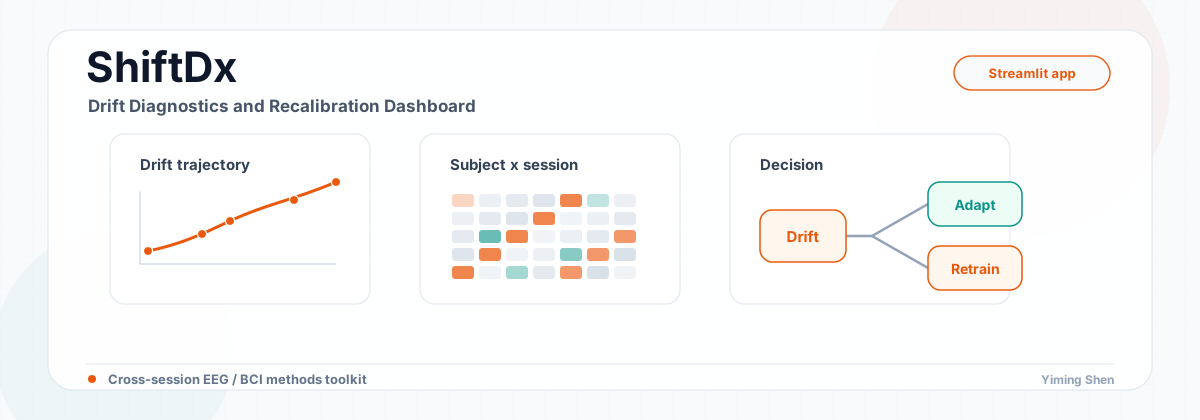
Complementary tools for reproducible transfer experiments, offline drift analysis, and sample-paced pseudo-online replay.
NeuroStream
Desktop app for sample-paced pseudo-online replay of recorded EEG, with motor-imagery pipelines, Euclidean Alignment, and progressive inference visualization.
Evidence: CSP, FBCSP, and tangent-space pipelines; 0.5 s checkpoints; sample-paced pseudo-online replay
02
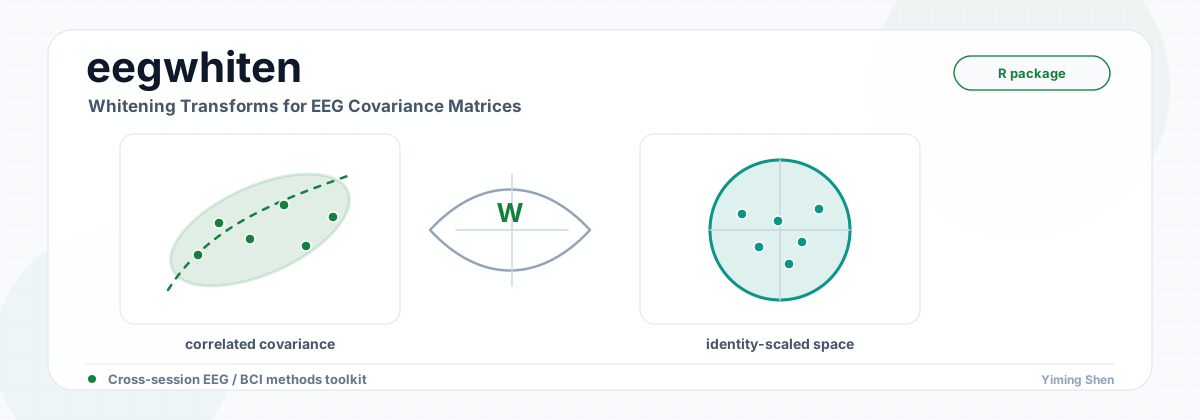
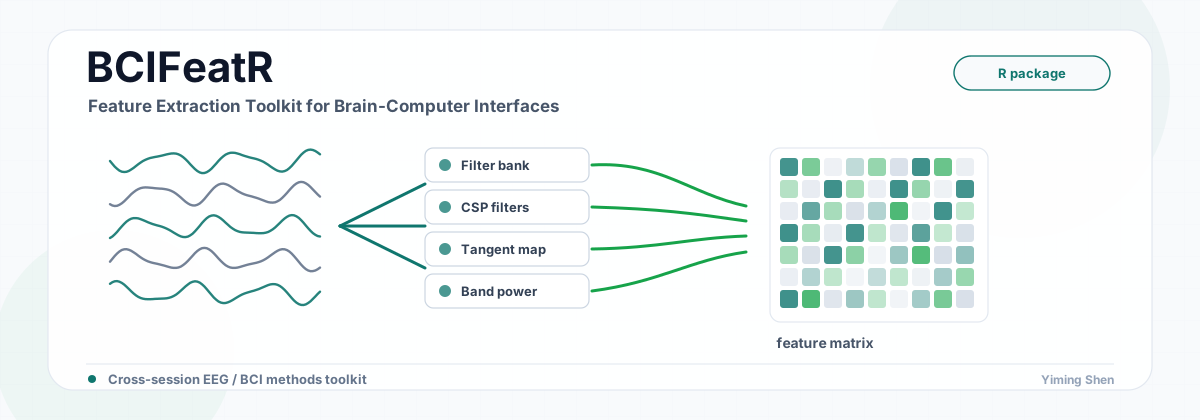
Build stable representations
Train/test-separated whitening and feature extraction for comparable EEG trials.
03
Adapt across sessions
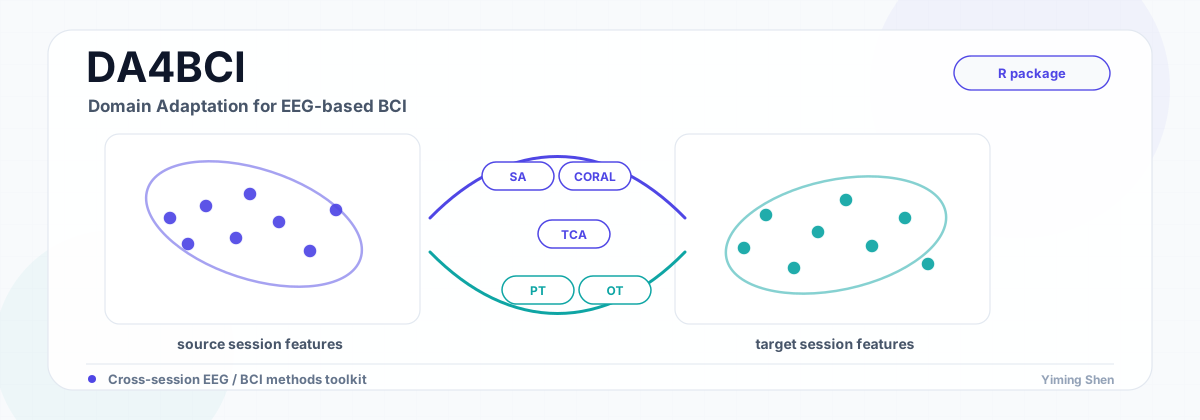
Reusable R and Python methods for alignment, transport, and source-target shift analysis.
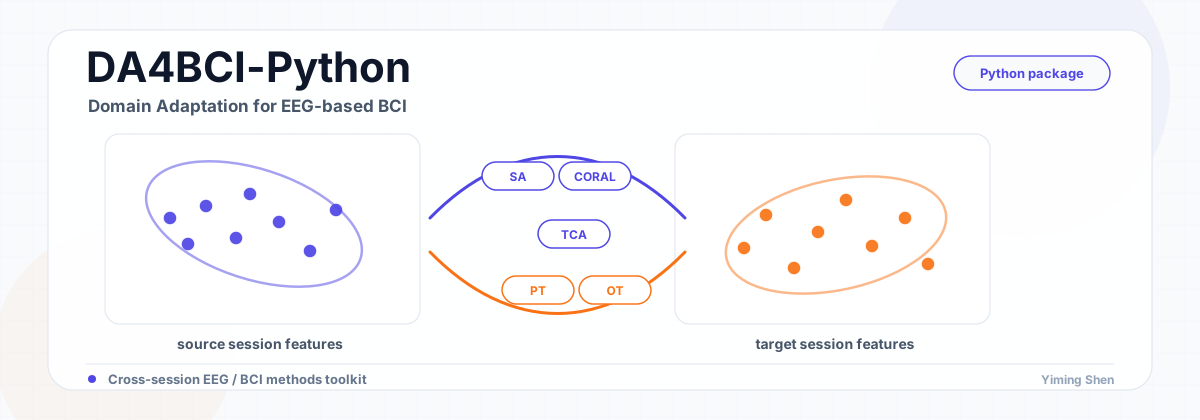
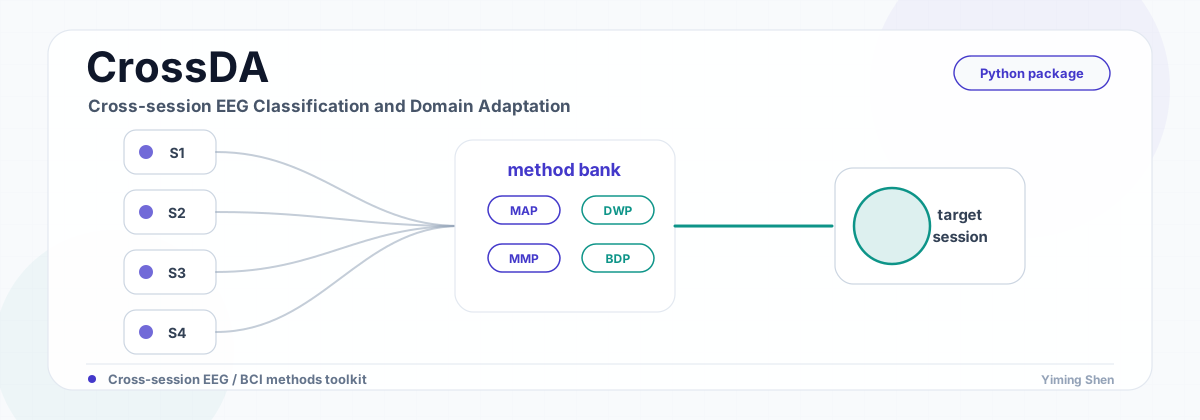
DA4BCI-Python
Python backend for EEG/BCI domain adaptation, shift metrics, SPD geometry, preprocessing, and drift detection.
04
Audit benchmark results
Interactive inspection of source-session roles, configuration sensitivity, and runtime tradeoffs.
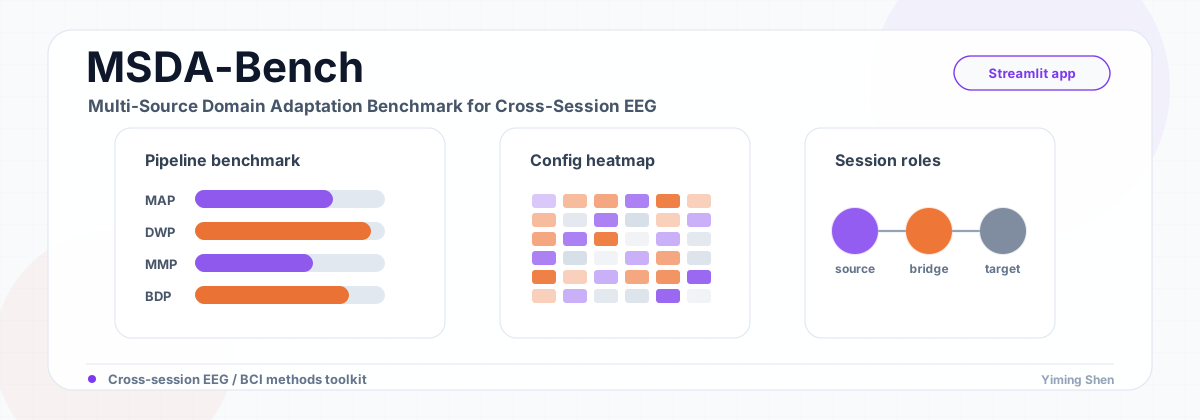
MSDA-Bench
Interactive benchmark dashboard for comparing source-session utilization strategies across MAP, DWP, MMP, and BDP pipelines.
05
Simulation & optimization
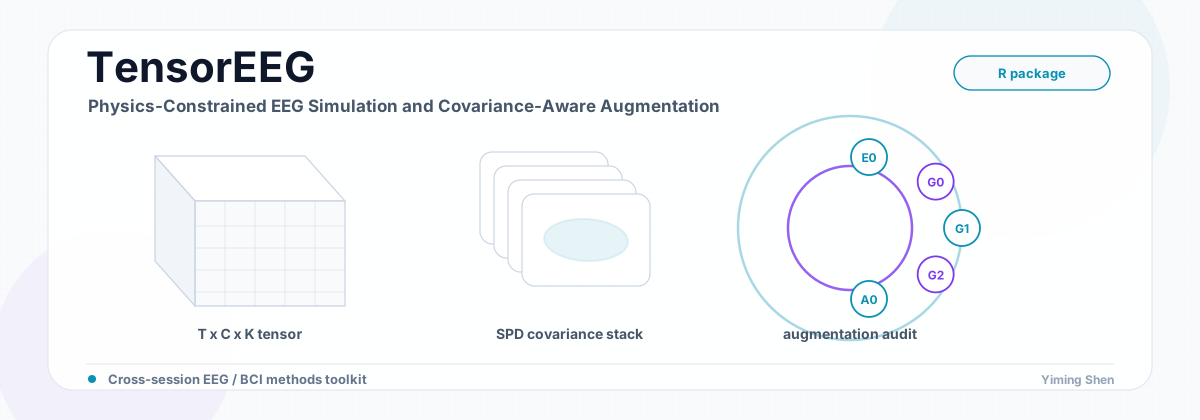
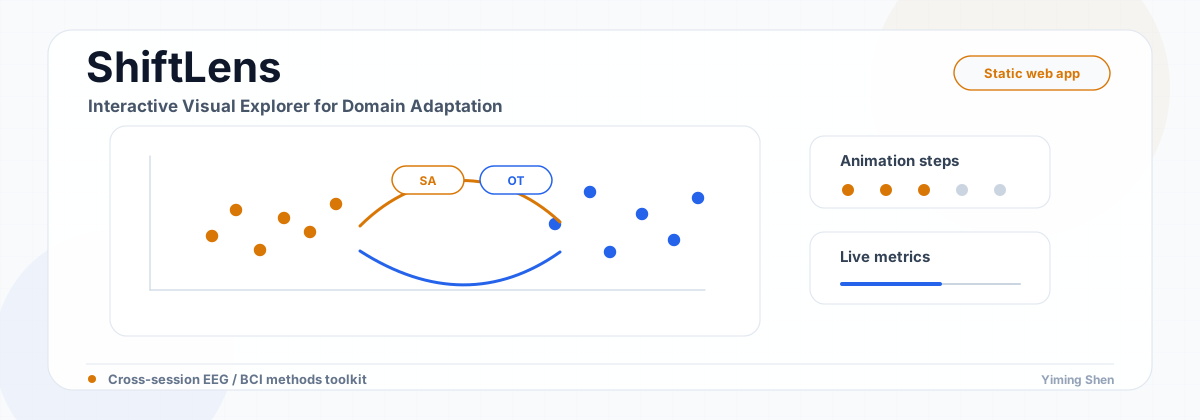
Electrode-layout search and model-based comparison, alongside tools for covariance geometry, augmentation audit, and method intuition.
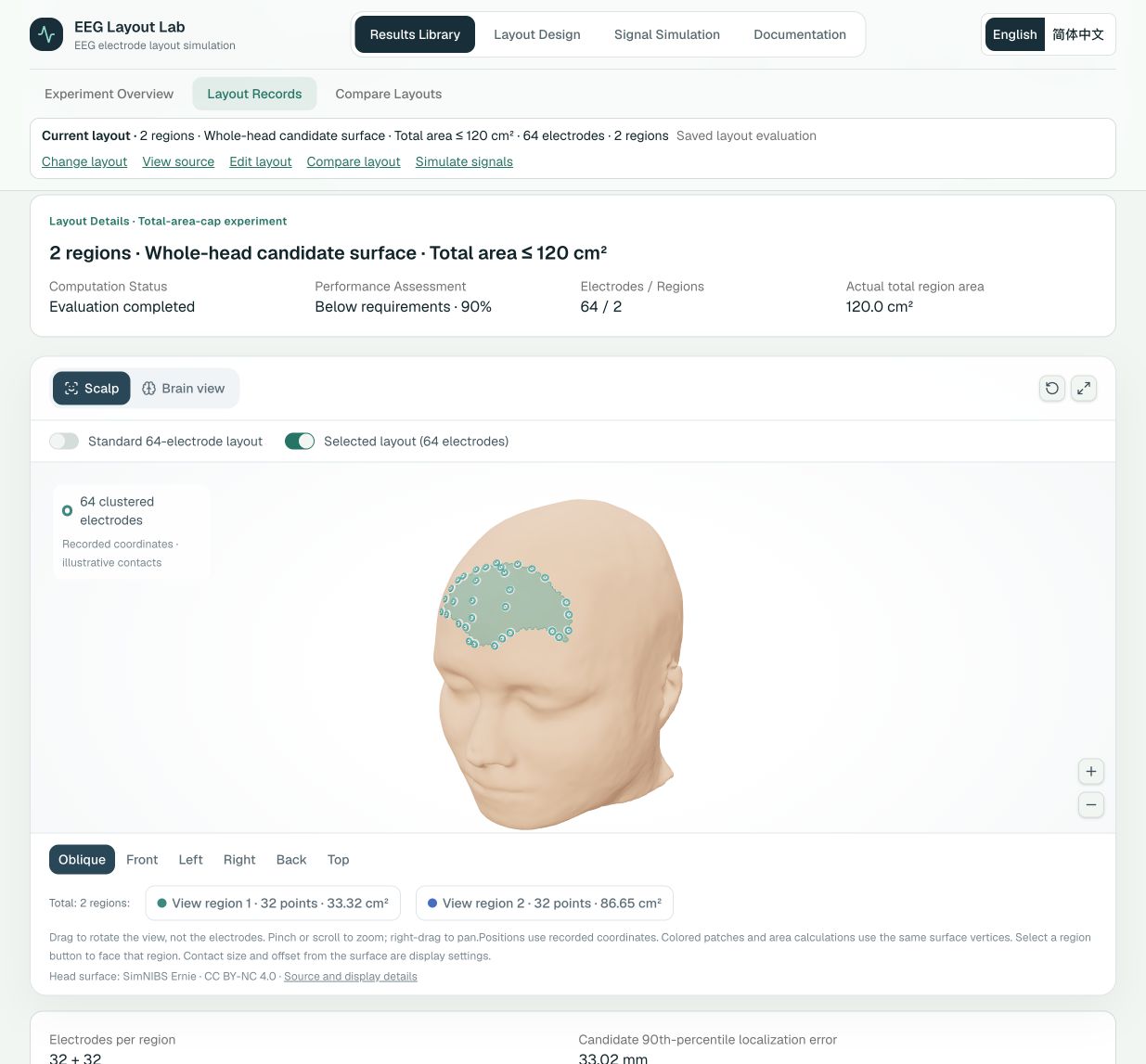
EEGLayoutLab
An interactive application for electrode-layout design, bounded optimization, and forward simulation. A 3D interface connects to Python computations and reusable local results; evaluations use one simulated head model.
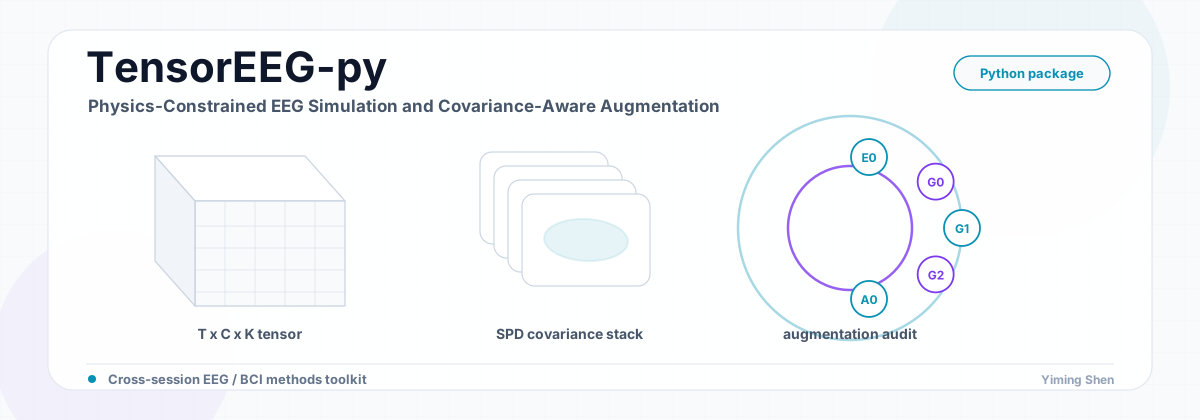
TensorEEG-py
Python package mirroring TensorEEG's simulation, augmentation, SPD geometry, fidelity audit, and manifest replay APIs.
06
Engineering Projects
Experimental application development that connects existing vision models to camera and device-control workflows.
+
Selected EEG Competition Work
Kaggle HMS - Harmful Brain Activity Classification, Silver Medal, rank 98 of 2,767 teams.
Kaggle HMS Silver Medal
Rank 98 of 2,767 teams (top 4%) in harmful brain activity classification from EEG.